


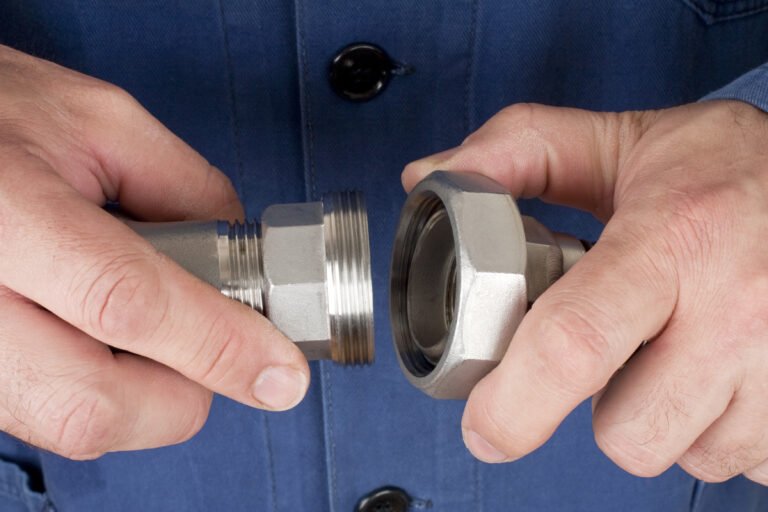
I still remember the first time a European customer rejected a shipment of bolts because the wrench did not fit smoothly. The hex looked correct. The tolerance was not.
The across-flats tolerance of hexagon fasteners is mainly defined by ISO 272 for wrench sizes and ISO 4759-1 for dimensional tolerances. These standards specify the nominal across-flats dimension and the allowable deviation to ensure proper tool engagement and global interchangeability.
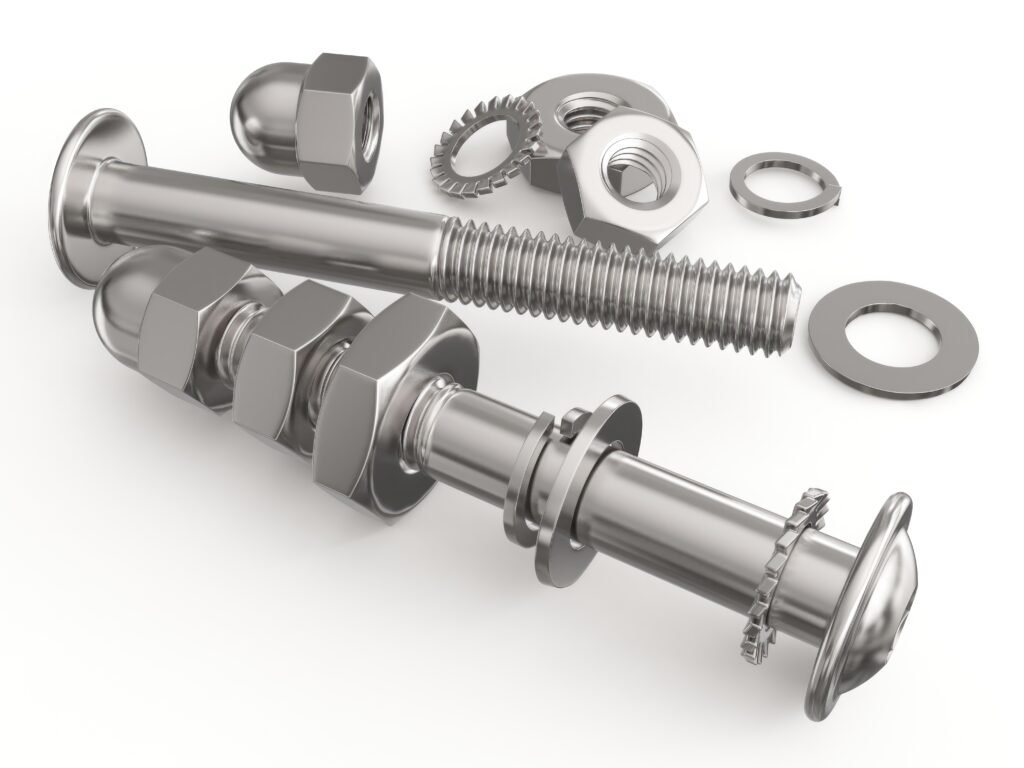
When I started working with distributors in Europe and North America, I learned a simple truth. A hex bolt is not just a threaded rod with a head. Its hex dimension must match the wrench system used worldwide. That match depends on strict international standards.
Which International Standards Define Hexagon Across-Flats Dimensions?
Many manufacturers focus on thread tolerance or mechanical strength. But buyers often care first about the hex size. If the wrench does not fit, the bolt becomes useless in assembly.
The key international standards controlling hexagon across-flats dimensions include ISO 272 (wrench sizes), ISO 4014 and ISO 4017 (hex bolt dimensions), ISO 4032 (hex nuts), and ISO 4759-1 (tolerances). These standards work together to define nominal sizes and allowable deviations.
Core Standards Used in Global Fastener Production
In my export business I often receive drawings that reference several standards at once. At first I thought this was redundant. Later I realized each standard controls a different technical element.
| Standard | Scope | Main Content |
|---|---|---|
| ISO 272 | Wrench openings | Defines across-flats nominal sizes |
| ISO 4014 | Hex bolts with partial thread | Defines head dimensions |
| ISO 4017 | Hex bolts with full thread | Defines bolt geometry |
| ISO 4032 | Hex nuts | Defines nut dimensions |
| ISO 4759-1 | Fastener tolerances | Defines dimensional tolerance grades |
| ASME B18.2.1 | Inch hex bolts | Used mainly in North America |
For example, if a drawing specifies ISO 4017, it defines the bolt type and geometry. But the tolerance of the hex head still follows ISO 4759-1.
Why Wrench Compatibility Matters
The reason these standards exist is simple. Tools must work everywhere.
Imagine a distributor in Germany buying bolts from China. If the hex head is even slightly oversized, a standard socket wrench may not fit. The installer then blames the supplier.
I once experienced exactly this situation. Since then, I always check the hex tolerance carefully during production.
What Is the Standard Tolerance Range for Hex Across-Flats?
When buyers ask about hex tolerance, they usually want a clear numerical range. The actual tolerance depends on the bolt size and product grade defined in ISO 4759.
Across-flats tolerance usually allows only negative deviation from the nominal size. This design ensures that standard wrenches can always fit over the hex head.
Example Tolerance Values for Common Metric Bolts
Below is a simplified reference table that I often share with engineers and purchasing managers.
| Bolt Size | Nominal Across Flats (mm) | Minimum Allowed (mm) | Maximum (mm) |
|---|---|---|---|
| M6 | 10 | 9.78 | 10.00 |
| M8 | 13 | 12.73 | 13.00 |
| M10 | 16 | 15.73 | 16.00 |
| M12 | 18 | 17.73 | 18.00 |
| M16 | 24 | 23.67 | 24.00 |
These values follow the tolerance principles of ISO fastener standards.
Why the Maximum Value Is Usually the Nominal Size
When I first studied the tolerance tables, one detail caught my attention. The upper limit is often exactly the nominal size.
There is a practical reason for this design.
If the hex head becomes larger than the nominal size, the wrench opening may not fit. Even a small increase of 0.1 mm can cause assembly problems in automated production lines.
Therefore standards prefer negative tolerance only.
This ensures that tools always fit.
How Do Product Grades Affect Hexagon Tolerances?
Another concept that buyers often overlook is the product grade of fasteners. ISO 4759 divides fasteners into different grades based on manufacturing precision.
Product grades define how tight the dimensional tolerance must be. Higher grades require more precise manufacturing and stricter inspection.
Common Product Grades
In my daily sourcing work I usually see three main product grades.
| Product Grade | Precision Level | Typical Application |
|---|---|---|
| Grade A | High precision | Automotive and machinery |
| Grade B | Medium precision | General industrial use |
| Grade C | Lower precision | Structural applications |
Most hex bolts used in machinery belong to Grade A or Grade B.
Why Precision Matters to Buyers
My typical European customer cares a lot about assembly reliability. He buys turned parts and fasteners and then sells them to machine builders.
If the hex head tolerance is unstable, the entire assembly line may stop.
For this reason, many distributors insist on Grade A tolerances even when the standard allows Grade B.
How Manufacturers Control Hex Across-Flats Tolerance
Knowing the standard is only the first step. The real challenge is maintaining the tolerance during mass production.
Manufacturers control hex tolerance mainly through cold forging die precision, process monitoring, and final dimensional inspection.
Key Manufacturing Factors
During factory visits I often observe several production variables that influence hex head size.
| Manufacturing Factor | Influence on Hex Dimension |
|---|---|
| Cold forging die wear | Gradual size increase |
| Material hardness | Affects deformation |
| Forming pressure | Changes head geometry |
| Heat treatment | May cause distortion |
| Surface coating | Adds slight thickness |
Among these factors, die wear is the most common cause of tolerance drift.
A worn forging die gradually enlarges the hex shape. If the operator does not replace the die in time, the hex head may exceed the allowable tolerance.
Typical Inspection Methods
Factories usually rely on several measurement tools to control hex dimensions.
| Inspection Tool | Function | Usage Stage |
|---|---|---|
| Vernier caliper | Measure across flats | Process inspection |
| Micrometer | High precision check | Quality lab |
| GO / NO-GO gauge | Pass/fail verification | Production line |
| Optical measurement system | Digital measurement | Final inspection |
In high-volume fastener factories, GO/NO-GO gauges are the most efficient method.
Workers can check hundreds of bolts quickly without measuring each dimension.
Why Understanding Hex Tolerance Helps Global Buyers
Many buyers think fasteners are simple commodities. My experience tells a different story.
Correct hexagon tolerance ensures wrench compatibility, assembly efficiency, and international interchangeability. Without standard compliance, even a small dimension error can cause serious production problems.
When I discuss technical details with buyers, hex tolerance often becomes a key trust point. If a supplier understands these standards clearly, buyers feel more confident.
Over time I realized something important. Technical knowledge is not only for engineers. It is also a powerful communication tool in international trade.
Conclusion
Hexagon across-flats tolerance for fasteners mainly follows ISO 272 and ISO 4759-1. These standards ensure correct wrench fit, manufacturing consistency, and reliable global interchangeability.